· Todd Martin · Home Improvement · 13 min read
How To Build Floor To Ceiling Cabinets
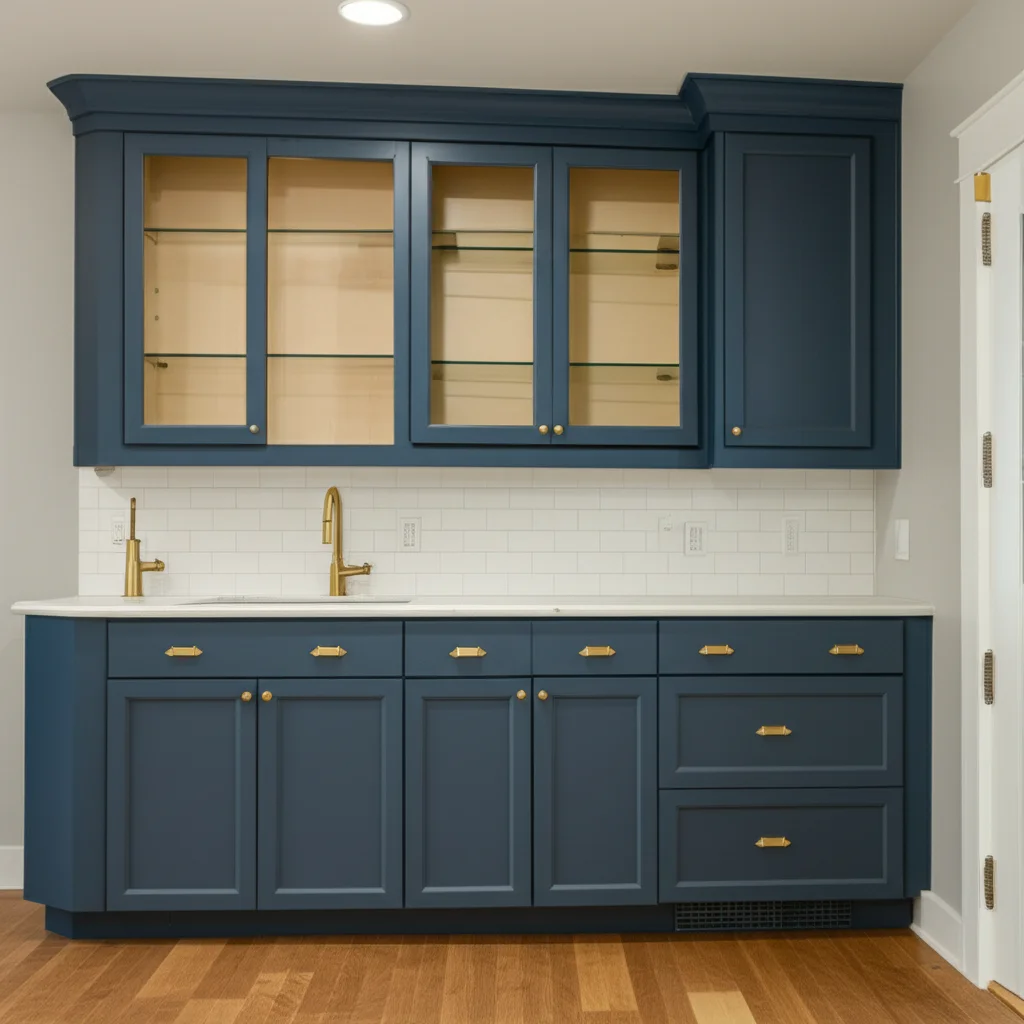
Build Stunning Floor-to-Ceiling Cabinets for Your Home
Have you ever looked at the empty space above your standard cabinets and wished for more storage? Building floor-to-ceiling cabinets can transform your home. These tall units give you maximum storage. They also create a sleek, built-in look. I found this project very rewarding.
Learning how to build floor-to-ceiling cabinets empowers you to create custom solutions for any room. Whether it’s a kitchen, living room, or home office, these cabinets add value and function. This guide will walk you through planning, construction, and installation. We cover everything from design choices to the final paint job. Get ready to build something amazing.
Takeaway
Building floor-to-ceiling cabinets yourself provides custom storage and a polished look. You can save money and gain valuable skills. Key steps include careful planning, precise cuts, sturdy assembly, and proper installation.
Building floor-to-ceiling cabinets involves designing, cutting, and assembling sturdy cabinet boxes. You then add face frames, doors, and shelves. Finally, you secure these tall structures to your walls and ceiling for a truly custom, built-in storage solution.
Planning Your Floor-to-Ceiling Cabinet Project
Starting any home improvement project well means planning carefully. Building floor-to-ceiling cabinets is no different. Good planning ensures your cabinets fit perfectly and serve your needs. I always spend extra time on this first step. This helps avoid mistakes later on.
Thinking about how you will use the cabinets is important. Do you need deep shelves for large items? Or many small sections for collectibles? Consider the room’s current style. Your new cabinets should blend in or enhance the existing decor.
Measuring and Design Considerations
Precise measurements are the foundation of any successful cabinet build. Measure the height, width, and depth of the space where cabinets will go. Measure in several places along the walls and ceiling. Walls and ceilings are rarely perfectly straight. Note the smallest measurement. Use that as your working dimension.
Think about the cabinet layout. Will it be one continuous unit or several modules stacked? For tall cabinets, you often build them in sections. You stack these sections during installation. This makes them easier to handle and move. Sketch your design. Consider door types, drawer placements, and internal shelving.
Choosing the Right Materials
Selecting suitable materials is crucial for durability and appearance. Plywood is a popular choice for cabinet boxes. It is strong and stable. Hardwood plywood works well for exposed surfaces. Medium-density fiberboard (MDF) offers a smooth finish for painting. MDF is heavy, but very stable.
For face frames and doors, solid hardwood like maple, oak, or cherry provides strength and beauty. You can also use paint-grade wood if you plan to paint your cabinets. Consider the finish you want. Will you paint, stain, or clear coat the wood? The material choice impacts the final look.
Essential Tools and Safety for Cabinet Building
Having the right tools makes the cabinet building process much smoother. It also ensures accurate cuts and strong joints. I found that investing in good tools pays off. Safety is also paramount. Always put your protection first when working with power tools.
Before you start any cutting or assembly, gather everything you need. This saves time and reduces frustration. Make sure your tools are in good working order. Sharp blades make cleaner cuts.
Power Tools and Hand Tools
You will need several key power tools. A table saw is essential for cutting plywood and other sheet goods accurately. A miter saw makes precise crosscuts for face frame parts. A router helps create dados and rabbets for strong joints. It also shapes edges. You will use a drill/driver for fastening parts.
Hand tools are also important. A good measuring tape, a combination square, and a straight edge are necessary for marking. Clamps hold pieces together during assembly. Chisels and a hammer might be needed for fine adjustments. A level is critical for installation.
Prioritizing Safety Gear
Safety must be your top priority. Always wear safety glasses when operating power tools. Wood dust and flying debris can cause serious eye injuries. Hearing protection, like earmuffs or earplugs, protects your ears from loud machinery. Wear a dust mask or respirator when cutting or sanding. Fine wood dust can harm your lungs.
Work in a well-ventilated area. Keep your workspace clean and free of clutter. This prevents tripping hazards. Never wear loose clothing or jewelry around rotating machinery. Follow all manufacturer instructions for your tools. Building is fun, but being safe makes it better.
Constructing Cabinet Boxes and Face Frames
Building the core structure of your floor-to-ceiling cabinets involves creating sturdy cabinet boxes and then adding face frames. The box provides the storage space. The face frame gives the cabinet a finished look and provides mounting points for doors. This is where your precise measurements become very important.
You build these components separately. Then you join them together. This method allows for careful construction of each part. It also makes assembly easier.
Building Strong Cabinet Carcasses
Cabinet boxes, also called carcasses, form the main structure. You typically build them from ¾-inch plywood. Cut the side panels, top, bottom, and back pieces according to your design. For strong joints, use methods like dadoes, rabbets, or pocket screws. Dadoes are grooves cut into the wood. Rabbets are L-shaped cuts on the edge.
Assemble the box using wood glue and screws. Ensure all corners are square. Use a large framing square to check. If your cabinets will be very tall, you might build them in two or three sections. For example, a base unit, a middle unit, and an upper unit. This makes handling and installation easier. For more detailed instructions on general cabinet building, you can find helpful tips on how to build your own closet cabinets. This approach helps create a solid foundation for your tall cabinets.
Attaching Face Frames for a Polished Look
A face frame is a solid wood frame that attaches to the front of the cabinet box. It covers the exposed plywood edges. It also provides a sturdy surface for attaching cabinet doors. Face frames add strength and a finished appearance. They are often made from solid hardwood.
Cut the stiles (vertical pieces) and rails (horizontal pieces) for your face frames. You can join them using pocket screws, dowels, or mortise and tenon joints. Pocket screws are popular for DIY projects. They create strong, hidden joints. Once assembled, attach the face frame to the front of the cabinet box with glue and clamps. Use finish nails or screws to secure it. If you need a more in-depth guide, learning how to build face frames for cabinets specifically can help you achieve a professional finish. This step significantly improves the look of your built-in units.
Assembling and Installing Your Tall Cabinets
Once you have built your cabinet boxes and face frames, the next crucial step is assembly and installation. This process transforms individual components into a unified, functional storage unit. Given the height of floor-to-ceiling cabinets, careful handling and precise leveling are vital. This stage requires patience and possibly an extra pair of hands.
Proper installation ensures your cabinets are stable, safe, and look professional. Rushing this part can lead to uneven cabinets or structural issues. I always double-check everything at this stage.
Stacking Cabinet Sections
If you built your floor-to-ceiling cabinets in multiple sections, you will need to stack them. Start by placing the base units first. Ensure they are perfectly level front to back and side to side. Use shims under the cabinet base if needed to achieve level. You can also build a dedicated how to build toe kick for wall cabinets for the bottom, which lifts the cabinet off the floor.
Once the base is level, secure it to the wall studs. Then, lift and place the next section on top. Align the edges and faces of the stacked units. Use clamps to hold them together while you secure them. Drive screws through the adjoining face frames or cabinet sides to connect them. For cabinets extending higher, such as how to build boxes above kitchen cabinets, this stacking method is essential. This creates a seamless, tall cabinet unit.
Anchoring Cabinets Securely to Walls
Anchoring your cabinets to the wall studs is critical for stability and safety. Floor-to-ceiling cabinets are heavy, especially when loaded with items. You must find the wall studs using a stud finder. Mark their locations clearly.
Drive long screws through the back of the cabinet boxes and into the wall studs. Use at least two screws per stud, spaced vertically. For the upper sections, ensure they are also well-anchored into studs. If no studs are available where you need to attach, use heavy-duty toggle bolts or other appropriate wall anchors. Always pre-drill pilot holes to prevent splitting the wood. Securing the cabinets properly prevents tipping and ensures they stay in place for years.
Finishing Touches: Doors, Shelves, and Trim
Adding the doors, shelves, and trim transforms your cabinet boxes into finished pieces of furniture. These elements define the look and functionality of your floor-to-ceiling cabinets. This is the stage where your vision truly comes to life. It also allows for a lot of customization.
These steps require careful work to achieve a polished result. Take your time to get everything straight and even. Small details make a big difference here.
Adding Custom Doors and Adjustable Shelves
Doors are a major visual component of your cabinets. You can build doors yourself or order them from a supplier. For a clean, modern look, consider flat panel doors. For traditional styles, raised panel or shaker doors work well. Attach doors using concealed European hinges for a sleek appearance. These hinges allow for easy adjustment after installation.
Adjustable shelves offer great flexibility. Use shelf pins and pre-drilled holes inside the cabinet box. This lets you change shelf heights as your storage needs evolve. Cut shelves from the same material as your cabinet boxes or a slightly thinner plywood. Edge band the front of the shelves for a finished look. For other rooms, consider how you might approach how to build wall cabinets for living room as the principles for doors and shelving are similar.
Applying Crown Molding and Base Trim
Crown molding adds an elegant, built-in finish to the top of your floor-to-ceiling cabinets. It bridges any small gap between the cabinet top and the ceiling. Measure and cut the molding carefully. Use a miter saw for precise angled cuts at corners. Attach the crown molding with finish nails. Fill nail holes and caulk seams for a seamless appearance.
Base trim, also known as shoe molding or quarter-round, goes along the bottom edge of the cabinets where they meet the floor. This hides any unevenness in the floor or cabinet base. It gives a clean, finished transition. Install base trim using finish nails. These trim pieces tie the cabinets into the room’s architecture.
Painting and Hardware: Bringing Your Cabinets to Life
The final steps involve painting or staining your cabinets and installing hardware. This is where your hard work truly shines. A good finish protects the wood and enhances its beauty. Choosing the right hardware complements your design style. These details add the final polish to your floor-to-ceiling cabinets.
This stage can be time-consuming, but the results are worth it. Take care to achieve a smooth, durable finish. Your cabinets will look professionally made.
Preparing and Painting Cabinet Surfaces
Proper surface preparation is essential for a lasting finish. Start by thoroughly cleaning all cabinet surfaces. Remove any dust, grease, or fingerprints. If the wood has imperfections, fill them with wood filler. Sand all surfaces smooth with fine-grit sandpaper. This creates a good surface for the primer to adhere to.
Apply a high-quality primer. Primer helps the paint stick better and provides a uniform base color. Apply at least two coats of your chosen paint, sanding lightly between coats. Use a brush for corners and edges, and a roller for flat surfaces. For a durable finish, consider a semi-gloss or satin paint, as they are easier to clean. Keep your painting area dust-free.
Installing Knobs, Pulls, and Hinges
Hardware is the jewelry of your cabinets. Knobs and pulls add function and style. Decide on the placement for each piece. Use a template or carefully measure to ensure consistent placement. Pre-drill small pilot holes for screws. This prevents splitting the wood.
Ensure all hinges are properly aligned and screwed into place. If you used concealed hinges, adjust them to ensure the doors are perfectly plumb and level. The doors should open and close smoothly. Take your time with hardware installation. It’s the final touch that makes your floor-to-ceiling cabinets truly complete.
FAQ Section
Q1: How do I measure accurately for floor-to-ceiling cabinets? A1: Measure the height, width, and depth of your space in multiple spots. Walls and ceilings are rarely perfectly straight. Use the smallest measurement for each dimension. Also, check for plumb (vertical straightness) and level (horizontal flatness) across the space. This ensures your cabinets fit properly.
Q2: What materials are best for DIY floor-to-ceiling cabinets? A2: ¾-inch plywood is excellent for cabinet boxes due to its strength and stability. For face frames and doors, solid hardwoods like maple or poplar work well. MDF is an option for painted finishes, offering a smooth surface. Choose materials based on your budget and desired finish.
Q3: Can I build floor-to-ceiling cabinets without professional tools? A3: While professional tools like a table saw make the job easier, you can build cabinets with common power tools. A circular saw with a guide, a miter saw, and a drill are essential. You might need to make more cuts manually. Precision and patience become even more important.
Q4: How do I ensure my tall cabinets are stable and safe? A4: Secure cabinets firmly to wall studs using long screws. Use a stud finder to locate studs accurately. For very tall units, consider anchoring them to the ceiling joists if possible. Build sturdy boxes and use strong joints. Always ensure the cabinet base is level before stacking sections.
Q5: What are common mistakes to avoid when building tall cabinets? A5: Avoid inaccurate measurements, as they lead to gaps or ill-fitting cabinets. Do not skip priming before painting, as it affects finish durability. Ensure you level and plumb cabinets correctly during installation. Overlooking safety precautions is another big mistake. Take your time and plan each step.
Q6: How long does it take to build floor-to-ceiling cabinets? A6: The time varies greatly based on your experience, the cabinet size, and design complexity. A single wall of basic floor-to-ceiling cabinets might take an experienced DIYer a week or two. A beginner could take several weeks. Break the project into smaller, manageable tasks.
Conclusion
Building floor-to-ceiling cabinets is a rewarding project that transforms your home. You gain valuable storage and a custom, built-in look. We covered everything from planning and measuring to cutting, assembly, and finishing. Remember that careful preparation and precise execution are key to success. You can absolutely achieve professional results.
By learning how to build floor-to-ceiling cabinets, you add significant value and functionality to your space. You also gain skills you can use for future projects. So gather your tools, plan your design, and start building. Your dream storage solution is within reach. Embrace the process and enjoy your beautiful, new custom cabinets.
- custom cabinets
- DIY woodworking
- cabinet construction
- storage solutions
- home organization

Todd Martin
Senior Writer
With over 15 years of experience in home renovation and design, I started HEG to share what I’ve learned with homeowners who want to create spaces that are both beautiful and functional. I’ve always believed in a hands-on approach, and over the years, I’ve picked up practical solutions that actually work. Through HEG, I aim to make home improvement more approachable, sharing real tips that help you create a home you truly love.